Showing posts with label Edibles. Show all posts

Friday, February 21, 2014

Growing Edibles in Unpredictable Weather

I live and garden in the high desert of Northern Nevada and not only is it dry, but spring weather can change dramatically from day to day. The weather inconsistency can be difficult to handle, especially for those of us who don’t have a greenhouse. The problem with waiting is that our cool season crops need time to grow before the heat. There lays the problem, wait to long to plant and lettuce is out, plant early and risk damaging weather.

Today's blog is meant to show you how I plant my cool season crops now, and keep them safe from damaging weather. Answers include watching the weather, KTVN with Mike Alger is the best and be prepared to cover and protect your plants as needed.  

Store bought covers


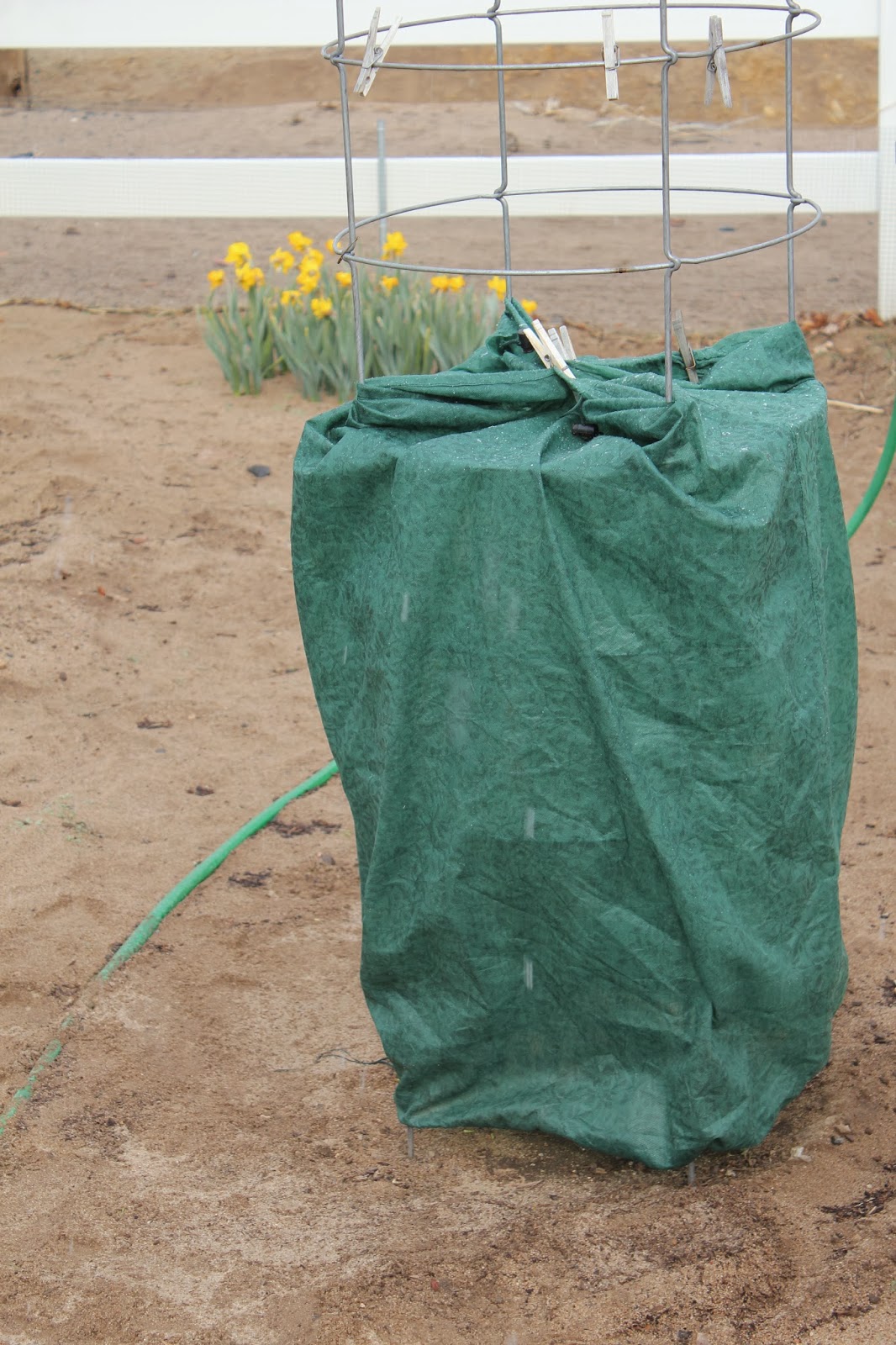
These covers are great and several seasons old. The white one has stakes which will help with the wind issues. The green one is the best, as you can see I leave it in place as long as needed bringing it up and down. I LOVE this one. It helps care for my dwarf peach.

Homemade covers

I found these water jugs at a water company. They make great temporary hot houses for small plants. Simply cut them long ways in half, or cut off the bottom. You may have to dig the tall ones into the ground in windy areas. 

Here is my friend Doug Bookey with his pumpkin seedling. These plants need to get in the ground as soon as possible, they need everyday possible to get to 500lbs plus. Here is his cover that he uses as needed. 

This homemade cover is another quick fix and something that I changed as soon as possible. But if the weather report calls for a freeze head out and put something up, it is better than losing a plant. 


Spur of the moment ideas 

Now I admit this is pretty ugly, but if this would keep the frost off of a newly planted edible wouldn't you use it. I also use this to keep the rabbits of. It is a short fix until you can use something that is easy on the eyes. 


Monday, February 10, 2014

Feeding the Soil for Spring Planting

This weather we have been enjoying has got me in the mode for gardening! It is a perfect time to add those all important amendments and nutrients to the plant areas, raised beds and containers. The rain and warmer temps have made the soil workable.

Yesterday I have added worm casting to one of my raised beds. I will be growing leek, shallots and other cool season edibles in this spot. In about a week I will start staggering my planting in 10 to 14 day intervals. This way they won't all mature at the same time.
Cool season plants can be planted in soils temps as low as 40 degrees. Keep in mind you may have to begin a watering program, so get the hose ready.


I will also be adding 2 to 3 bags of the Kellogg's Garden Amend mixing in well. Once my plants get a chance to settle in I will begin an organic fertilizing program.
Kellogg's Garden Products has a new hose end organic fertilizer for veggies, more details to follow on this product.


Tuesday, September 24, 2013

Protecting Your Plants from the Birds

This blog post may help gardeners that have struggled keeping birds from munching on your edibles and blooms, it is exhausting. I have become quite efficient in quickly manufacturing items that will keep the critters out, but let the sun it. Here are two that I think will help any of you that have similar problems.

1. Birds have been eating the blooms and buds on my neighbors petunias and striping the Dracaena blades. Look at the cheap and easy way she stopped the problem. She simply folded aluminum over the sides of the container, shiny side up. I assume that the shiny foil is keeping them for landing on the edge of the container. Whatever the reason the only concern is our high winds may cause you to replace as needed.


2. My only honeydew was being pecked and I know it was a bird because no other critters can get in this area. I took one off my customized tomato cages, and used garden string to make the access from the top difficult.
(A customized tomato cage is a cage that has been wrapped in chicken wire.)


Please feel free to let me know if you have any questions with you critter control, send a note to: gardencoachinreno@gmail.com


Wednesday, June 19, 2013

Vermicomposting using a Worm Bin


Vermicomposting is the process of making compost from kitchen scraps by using worms to make a heterogeneous mixture of worm casting and  tea for use in the garden. Worm tea and casting provide an amazing supply of nutrients while helping to build a healthy soil profile.
This worm bin is my neighbors, I help with kitchen scraps and then I am rewarded with worm tea. It is a dark liquid that I dilute to the color of weak tea, then poured into the soil or sprayed onto the leaves of my plants. The bin is the well house, a room that stays cool in the summer and warm in the winter, with the use of a heat lamp. If you keep the area somewhere between 60-80 degrees and the feeding balance right, it is usually odorless. If the bin should get to wet simply add shredded non-glossy paper or dried leaves. It is excess moisture that will create any unpleasant odors. 

This bin is kept inside the kitchen. It is under a table and is easily maintained. It has no smell, and provides about 1 to 2 quarts of tea a month. The owner cleans and checks regularly and makes sure it stays on the dry side. 
Worm tea and casting have an amazing nutrient package that when added to soils; carry a diverse population of microbial life. Adding casting will increase diversity of beneficial organisms in soils, promote soil structure and aid in disease and pest suppression. Nutrients from worms casting are highly soluble which means they are broken down by water. With a liquid application the plant can benefit quickly and continually with the readily available nutrients that won’t burn roots. Applying casting 2 to 3 times a year will fortify soils for continued use and health in the garden.  
Worm casting are naturally 5 times higher nitrogen, 7 times richer in phosphorus, 3 times richer in, magnesium, 11 times richer in potassium and 1.5 times richer in calcium


Sunday, June 9, 2013

Growing Leeks


Leeks are one of my favorite edibles; I use them in many of my meals. One thing that I would like to pass on is how to get them tall, get the most amount of white usable part of the plant. I hate it when all I have to choose from are leeks that are a foot long, but only have 2 to 3 inches of white soft product.

Once your leeks have rooted in and begin to grow mound amendment, compost or a hardy soil around them. What you are doing is keeping the sun from turning the white section green; it can’t photosynthesis so it will stay light and soft. 
                                                   Before

                                                     After


You can harvest leeks anytime they are the size of an average thumb. At this time of the year I only pull what I am going to use in the next few days, I rinse the dirt from the roots and store with tops left on.

So, plant these great edibles they are easy to grow and great to eat. 

Thursday, May 30, 2013

The benefits of worms and worm casting


I have often mentioned worms and worm casting as a way to feed your landscape in a few of my posts. Although my worm knowledge is limited I thought it was time to pass on what I know about worms, worm casting and worm tea. I also use worm tea from furnished by my neighbor and my plants are healthy and productive.

Worms: Worms eat organics in the soil and release a by- product called casting. Worms have the unique ability to eat compost materials and deposit an amazing array of beneficial nutrients that are water soluble and extremely nutrient rich.

Worm Castings: Worm castings have an amazing amount of nutrients that add a diverse population of microbial life. Worm casting are the by product that when left behind add beneficial organisms in soils, promote soil structure and aid in disease and pest suppression. These amazing nutrients come from the way a worm uses enzymes to break down what they eat turning their droppings into food for plants. 

Worm Tea: Worm tea is made when water runs off or drips over worm casting. This can be in a bucket of water, or in manufactured worm bins. The tea is a rich thick liquid that is diluted in water. It can also be applied with a spray applicator directly to the leaves.

Nutrients from worms casting are highly soluble which means they are broken down by water easily. Using a liquid application benefits the plant quickly, and feeds continually without burning the plant. You can either make a worm tea, or add the casting to the planting area. It is very easy, and so beneficial.
Worm casting are naturally 5 times higher nitrogen, 7 times richer in phosphorus, 3 times richer in magnesium, 11 times richer in potassium and 1.5 times richer in calcium.

Most organic bagged soil products and organic fertilizers will have worm casting as part of the menu. Have a look at Kellogg's Garden Products, link below to check out there great products. 
Some garden centers may carry bagged worm casting and even bags of worms for you to get started raising your own worms and harvest the casting for your garden.

Monday, May 27, 2013

Weather and Watering


Watering is the number one reason why plants struggle, and then die.  We have reached the time of the year when you should be watering regularly; and there may come a time when your edible gardens and containers will need daily watering. 
Counting on rain showers is risky in the high desert.  We have experienced days of wet weather when sun was predicted and dry hot winds when there was a strong change of rain.  I have also noted differences between weather reports making this topic even more challenging. 
In this photo I am giving the area of my lawn that has dried out from the daily dry winds a short soaking. I will do this once a week as needed.  
    
Here are a few suggestions to help with proper watering.
     Keep plants healthy with organic nutrients (more to follow on this)
     Watch the weather and be ready to cover for the cold or the heat
     Check irrigation system and emitters regularly
     Water as needed, even if you have to drag a hose out
     Plant in the correct sun light for the plants needs 

Friday, May 24, 2013

Knowing your tender plants


The one thing high desert gardeners can count on is unwelcome weather at the most inopportune times. Many gardeners just can’t help themselves and once the weather warms, and stay warm, we plant. We are the same gardeners that have the tools to cover those ‘tender’ plants when needed. A tender plant is one that can’t take temperatures lower than 38° to 40°. Of the top of my head the list includes basil, pepper, squash, impatient and marigolds.
Every newscaster in our area always mention tomatoes, but they leave out peppers, basil and squash. You will find these plants in garden centers before they should be planted, and that is okay. Just buy them and put them in a safe place until we are done with hard freezing weather. Our traditional planting time is Memorial Day Weekend here, but like many of you I was out there weeks ago planting and enjoying our lovely spring, I did plant basil and will now have to re-plant.
This photo is a tomato plant that went in May 6th and was not ever covered, even last
night and look, she is okay.  I am NOT telling you to ignore your tomatoes; I am just making sure you know there are more tender plants in your garden that may need covering during the unsteady days of spring.
Enjoy your day in the garden
Marnie

Tuesday, May 21, 2013

Garden Consultations for Northern Nevada


Ever thought about having a professional garden consultation but afraid you would not be able to keep up, or you might be embarrassed how your yard looks, don’t be. My garden consultations focus on your needs and desire to have a healthy and beautiful yard ensuring it is something you can care for. 
My visit will include:
● plant ID   
● proper plant Selection   
● healthy landscape design 
● hands on gardening instruction
● solutions to landscape concerns     
● complete photo album of your landscape                            
● establish an easy edible garden 


Send me a note and let’s get you gardening!           

Friday, May 17, 2013

Seed Starting

Next week I will be hosting the Reno New Comers Garden Club for there May meeting on  edibles. On of the things I plan on covering is seed starting. The reason gardeners use seeds is because they are less expensive than start plants and the variety of plants is amazing. I met the owner of Botanical Interest seed company years ago and am pleased to have his support for my blog and I can attest to the great product he provides to gardeners. Have a look at his website to get inspired.
http://www.botanicalinterests.com/
Key points to seed starting:
1. Plant seeds in loosened soil that has been amended with organic compost and drains well.
2. Follow the package directions for planting depth and spacing, don't crowd your carrots and other root crops it is a pain to thin them out and they need room to grow.
3. Watering is key, I mean key to germination. Once the seed shell softens and starts to open a tiny white colored plant starts to push through the soil. It must not dry out, you may have to water more than once a day depending on the weather. Once out of the ground and has multi leaves all is well, you have a plant!
You will often read in my blog how important correct watering is here in our beloved high desert. This could not be more true with seed starting.
So get out there and try seeding something. I planted sunflower seeds that were 3 years in the pack and they are all doing great, these were from Botanical Interest, but if seeds are stored in a cool dry spot they will remain viable for years.
Let me know if you have any questions with seeding, it is a topic with many faces.
Happy gardening and seed starting.


Wednesday, May 15, 2013

Planting tips

With planting season in full spring it is important to make sure we are doing the best we can do for our new plants. Our unique soils are lacking in measurable organics and can be on the salty side which is not a great place for some plants, especially edibles. Our short growing season added to the lack luster soils makes it important to amend before planting. The Kellogg's Garden Products company has just this year brought OMRI certified organic soils and amendments to the home improvement stores and they are priced right. I love the Patio Plus and my containers have been blooming like crazy and are easy to keep.
Here is the link for a great list of products and information about them.

Monday, May 13, 2013

Here come the pests, yikes!

Now that we have had an expend period of warm and even hot temperatures here come the pests. Those unwanted chewing and sucking insects that have been laying in wait to start feeding on our trees, shrubs and perennials. Other pests are rabbits, squash bugs, powdery mildew and fungus are considered pests. Pests are anything that disrupts the plants ability to grow properly.
Aphids have been sited in those gardens that may have suffered some kind of stress. It is important to know that insects don't see your plant material, they smell out those that might be in stress. Then the eggs are laid in the fall, and now they are ready for some food, your plant.
I have provided two links below from the UNR Cooperative Extension program that deals with Aphids and another that deals with are you sure you have a pest. These have been prepared by experts that see these problems day in and day out.
Insect ID is not easy and needs to be done correctly so you use the proper method of control and removal. The photo below is a photo of aphids on a crabapple, there are other colors as well, tan, brown and even yellow.
You can take your samples to the extension office at:
4955 Energy Way Reno Nevada    775-784-4848
Link to Aphid control from the University of Nevada Reno Cooperative Extension.
http://www.unce.unr.edu/publications/files/ho/2002/fs0210.pdf
http://www.unce.unr.edu/publications/files/ho/2012/fs1223.pdf


Friday, May 10, 2013

Deadheading, when and why?

Many gardeners may think that (deadheading) cleaning off the spent blooms is to make your plant looks good, but little did they know that they are helping your plants bloom more. Annuals especially love to get those old blooms removed. The first thing your plant will do is set more blooms. Why? Because you did not let it go to seed. Plants are all about blooming and going to seed.
You can see that I have cut off dried blooms, but there are plenty more and there are buds all over the place.
So, clean up your blooming plants and edibles for the life of your plant.


Thank you Spring Rains!

It is amazing what 5 days of spring rains can do to your lawn and garden in the Northern Nevada region where I live. The photo below was taken this morning (I love the morning light) so I can remember how beautiful my lawn looks in the spring, it will take on a whole different look in the heat of the summer.
I am planting my tomatoes and basil today! I will take a photo or two and send you a few pointers when planting so keep an eye open for that.
Have a great Mother's Day weekend to all of my viewers who are Mom's, it is the greatest job I have ever done, our son is wonderful.
Enjoy the garden, it is a great place to hang out!
Marnie


Wednesday, May 8, 2013

To Plant or Not to Plant

I asked my face book friends if they have planted tender annuals and edibles yet, or are they waiting, I received a variety of answers. For high desert gardeners it can be a risk to get excited before the middle of May, when we are hopefully done with spring freeze.
I have decided to plant this Saturday and be ready to cover as needed.
You may be thinking I am a bit crazy, but I checked with my friends at NOAA and feel comfortable, and the ground is warm and ready for my plants.
Use your best judgement, plant if you like and be ready for any cold spells with something to cover them with.
Happy Gardening,
Marnie